Archives
- 2026-09
- 2026-08
- 2026-07
- 2026-06
- 2026-05
- 2026-04
- 2026-03
- 2026-02
- 2026-01
- 2025-12
- 2025-11
- 2025-10
- 2025-09
- 2025-04
- 2025-03
- 2025-02
- 2025-01
- 2024-12
- 2024-11
- 2024-10
- 2024-09
- 2024-08
- 2024-07
- 2024-06
- 2024-05
- 2024-04
- 2024-03
- 2024-02
- 2024-01
- 2023-12
- 2023-11
- 2023-10
- 2023-09
- 2023-08
- 2023-06
- 2023-05
- 2023-04
- 2023-03
- 2023-02
- 2023-01
- 2022-12
- 2022-11
- 2022-10
- 2022-09
- 2022-08
- 2022-07
- 2022-06
- 2022-05
- 2022-04
- 2022-03
- 2022-02
- 2022-01
-
Animal fat appears to increase
2024-05-13
Animal fat appears to increase C. perfringens counts compared with vegetable oil, so there may indeed be some advantage to vegetable diets at least in terms of fat sources (Knarreborg et al., 2002). Small grains such as wheat, rye, oats, and barley, with high levels of non-starch polysaccharides are
-
That increased longevity was not
2024-05-13

That increased longevity was not the exclusive result of blood pressure reduction. This was demonstrated by analysis of life-long, whole body deletion of AT1A receptors in normotensive mice. These animals exhibited a very significant increase in lifespan when compared to wild- type mice [159], [160]
-
br Acknowledgement Work in the McEwan Laboratory is funded b
2024-05-13
Acknowledgement Work in the McEwan Laboratory is funded by the Chief Scientist Office of Scottish Government: Grants ETM-258 and ETM-382. BE is supported by an Erasmus scholarship (D -JENA01). Introduction The equine placenta is a noninvasive transient organ, classified as diffuse and epithel
-
br Perspectives br Acknowledgments This
2024-05-13
Perspectives Acknowledgments This investigation was supported by a Research Grant 2010/01385-5 from FAPESP (Sao Paulo Research Foundation, Brazil). P.F.S. was recipient of a CNPq (National Council for Scientific and Technological Development, Brazil) productivity grant. R.F.A. was recipient of
-
br Acknowledgments This work was
2024-05-13
Acknowledgments This work was supported by a grant of the Romanian National Authority for Scientific Research, CNCS – UEFISCDI, project no. PN-II-ID-PCE-2011-3-0571, awarded to F.A.M. D.V.N. was co-financed from the European Social Fund through Sectorial Operational Program Human Resources Develo
-
SNS-032 Since the publication of the guidelines
2024-05-13
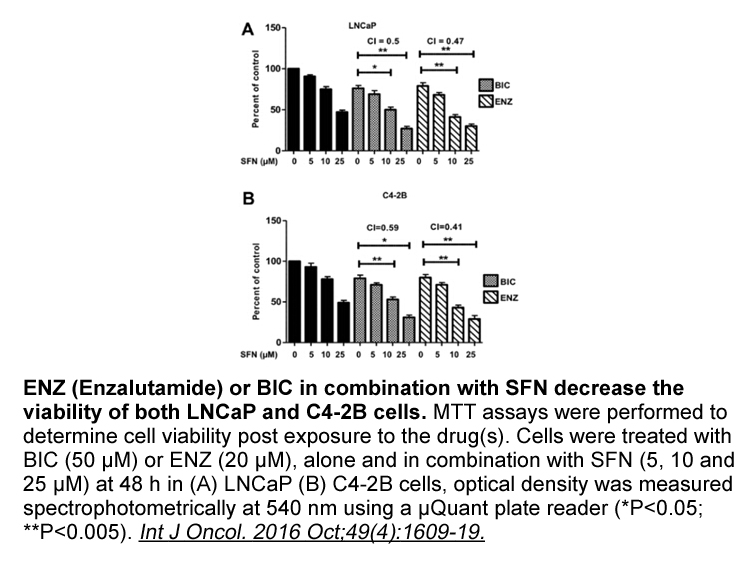
Since the publication of the 2011 guidelines, data have continued to accumulate indicating that the cognitive decline in AD occurs continuously over a long period [6–8], and that progression of biomarker measures is also a continuous process that begins before symptoms [9–14]. Thus, the disease is n
-
Similarly compound was prepared from aldehyde d
2024-05-13
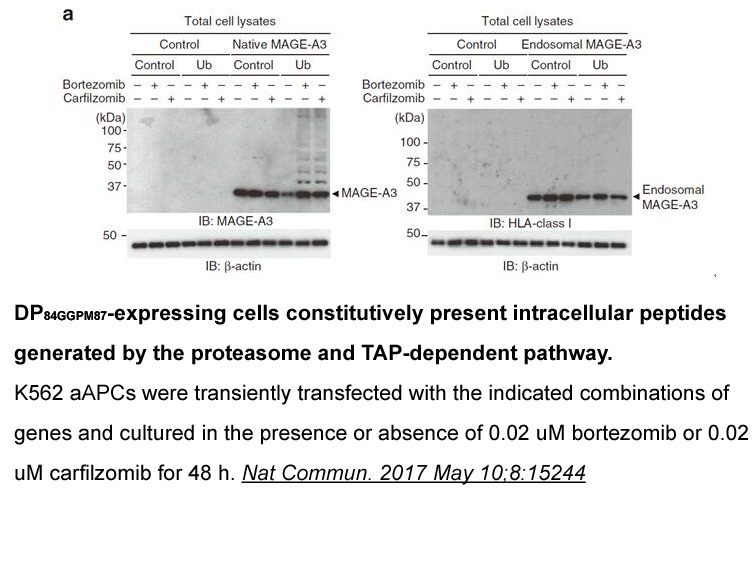
Similarly, CGS 21680 HCl 13 was prepared from aldehyde 8d by following similar procedures (Scheme 3). Condensation of 13 with 7b or 7e provided the corresponding amides 9j or 9k, which then went through O-debenzylation by BCl3 to deliver the final compounds 10j and 10k in 37% and 32% overall yields
-
In addition to it we also showed that glycine
2024-05-13
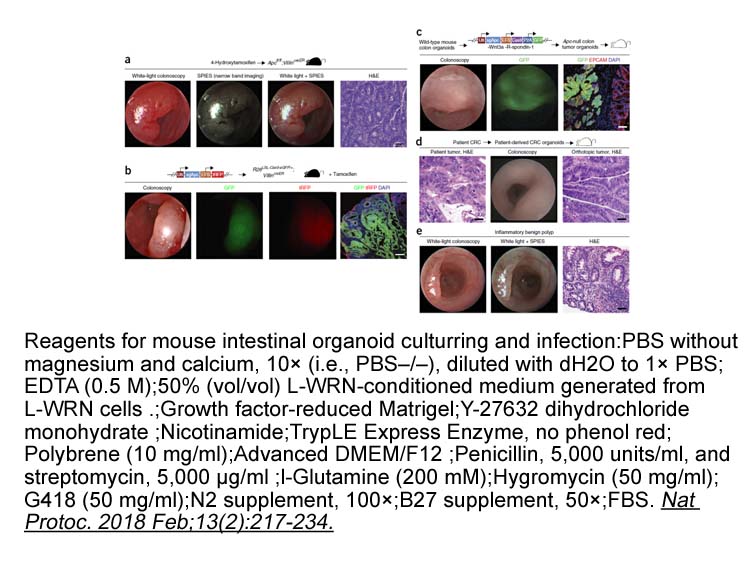
In addition to it, we also showed that glycine increases miR-301a expression which directly binds to PTEN 3′UTR target sites [13]. Glycine confers neuroprotection through microRNA-301a/PTEN signaling in rats cortical neurons in oxygen deprivation model [13]. Substantial studies indicate that inhibit
-
It is worth pointing out that phenotypes
2024-05-13

It is worth pointing out that phenotypes of in vivo HSP90β inhibition were not identical to those observed in rapsyn mutant mice (Gautam et al., 1995). Postsynaptically, junctional AChR clusters appeared fragmented, in addition to expected reduction in AChR intensity, in muscles injected with 17-AAG
-
Since pyrrolopyrimidine dithiolanes and both
2024-05-13
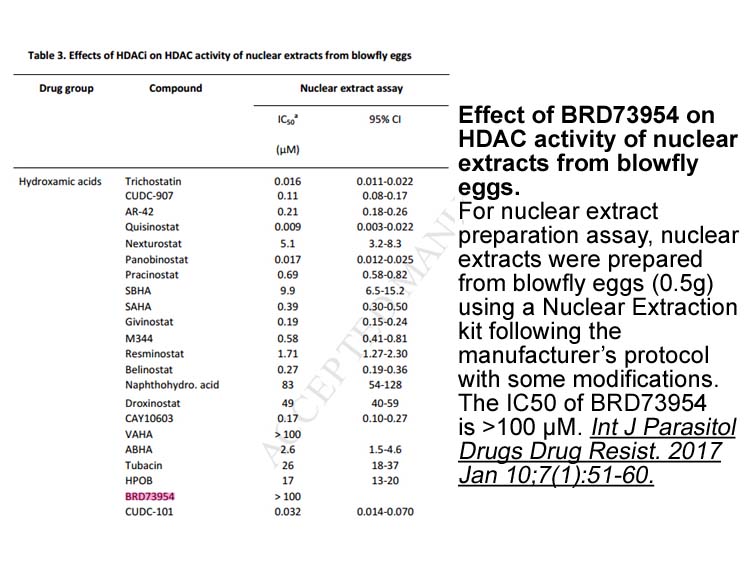
Since pyrrolopyrimidine dithiolanes and both displayed particularly excellent levels of ACK1 inhibition, these analogs were viewed as potential candidates for further investigation in tumor xenograft experiments. While in vitro metabolic studies indicated that pyrrolidine was predicted to be sign
-
br Materials and methods All animal experiments were
2024-05-13
Materials and methods All animal experiments were performed using the recommendations of the Guide for the Care and Use of Laboratory Animals (National Research Council, 2011) and approved by the University of Colorado—Denver Institutional Animal Care and Use Committee. Adult male Sprague—Dawley
-
Because LTs are proved to mediate
2024-05-13
Because LTs are proved to mediate multiple biological and pathological responses in various disease states, the 5-LO biosynthetic pathway producing LTs from AA have been the target of drug discovery efforts for over two decades. As observed from literature, a pile of research efforts has been direct
-
Subsequently Palvimaki et al corroborated Ni
2024-05-13
Subsequently, Palvimaki et al. (1999) corroborated Ni and Miledi's study by demonstrating that treatment with fluoxetine leads to 43% occupancy of the 5-HT2C receptors. Moreover, the affinity of fluoxetine for 5HT2C receptors (Ki 65 nM) is close to its affinity for 5-HT transporters (Ki 33 nM) (Ni
-
On the other hand key enzymes also involved in
2024-05-11
On the other hand, key YAP-TEAD Inhibitor 1 also involved in NO metabolism are nNOS and eNOS. Apparently, during acute ischemia, eNOS activity and NO concentration surge for a short period of time (Schulz et al., 2004) but eventually the expression and activity of the synthase and consequently NO co
-
Assessment of antibiotic appropriateness is receiving increa
2024-05-11
Assessment of antibiotic appropriateness is receiving increased attention in the face of growing concerns about the emergence of MDROs, as well as the rise in adverse outcomes associated with antibiotic use such as C. difficile infection. In this study, 15% of cultured Gram-negative organisms met th
7922 records 186/529 page Previous Next First page 上5页 186187188189190 下5页 Last page